
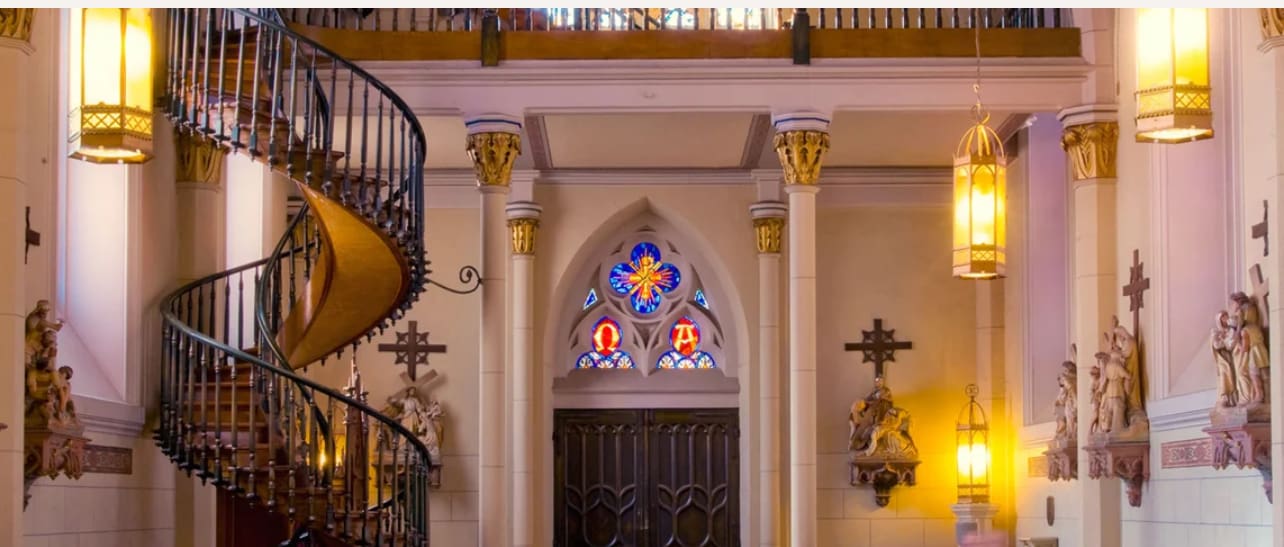
Here are a few theories that attempt to shed light on the construction of the staircase
One theory suggests that the carpenter who built the staircase used a hidden wooden support structure that provides the necessary stability without being visible from the outside. This hidden support structure could have been skillfully integrated into the design of the staircase during construction. Another theory proposes that the staircase’s unique double helix design contributes to its
stability. By incorporating two intertwined spiral staircases, each supporting the other, the structure may distribute weight evenly and provide the necessary balance for the staircase to stand without a central support. It is believed that the carpenter used traditional woodworking techniques such as mortise and tenon joints to secure the staircase’s treads and risers together without the need for nails or visible supports. These joints can provide structural integrity and stability to the staircase. The construction of the staircase likely required exceptional carpentry skills and craftsmanship. The unknown carpenter may have possessed advanced knowledge of woodworking techniques and structural engineering principles that enabled the creation of the intricate spiral design. Despite these theories, the miraculous staircase at the Loretto Chapel remains a source of wonder and intrigue, inspiring visitors with its architectural beauty and the enduring mystery of its construction. While scientific explanations offer plausible theories, the staircase’s legacy as a symbol of faith and divine intervention continues to capture the imagination of those who encounter this remarkable architectural marvel. The Loretto Chapel staircase continues to captivate visitors and believers alike, serving as a symbol of faith, mystery, and divine intervention.

Leave a Reply