Author: Katrina Gamse

  • The Patterson-Gimlin Film – Is Bigfoot Real?

    The Patterson-Gimlin Film – Is Bigfoot Real?

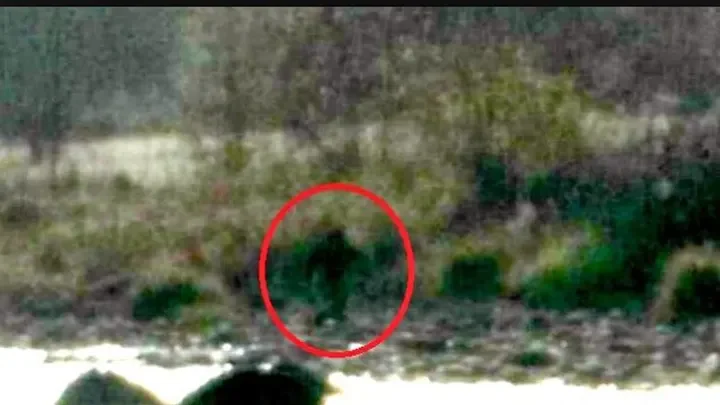
    The Patterson-Gimlin film, captured on October 20, 1967, is undoubtedly one of the most well-known pieces of evidence in support of the existence of Bigfoot or Sasquatch. Shot by Roger Patterson and Bob Gimlin in Bluff Creek, California, the video depicts a large, hairy creature walking upright through a wooded area.

    To determine if it is likely a real Bigfoot in the video, we must examine several key aspects. First, the appearance of the creature itself is highly compelling. It exhibits characteristics consistent with eyewitness accounts of Bigfoot, such as its large, muscular physique, long arms, and bipedal locomotion. The creature’s height, estimated to be around 7 to 8 feet tall, is also in line with typical descriptions. Its distinctively hairy and ape-like appearance further supports the notion of it being a genuine Bigfoot.

    Moreover, the movements and behavior captured in the video are notably primate-like. The creature walks with a deliberate gait, swinging its arms in a manner similar to how primates move. The fluidity and naturalness of these motions suggest it is not someone in a costume attempting to imitate a Bigfoot but rather a living creature.

    Another crucial aspect to consider is the context and circumstances surrounding the video’s capture. Patterson and Gimlin were experienced outdoorsmen and had no history of deceit or hoaxing. Their primary intention was to document evidence of the creature, not to deceive or create a spectacle. Furthermore, the remote location of the filming site makes it less likely for someone to have staged such an elaborate hoax without detection.

    The authenticity of the Patterson-Gimlin film has been repeatedly scrutinized over the years, with various arguments presented to challenge its veracity. Some critics argue that the quality of the footage makes it difficult to conclusively determine whether it is a real creature or a person in a suit. However, advancements in technology and digital analysis have largely debunked many of these claims.

    Some of the key anatomical details revealed through frame-by-frame analyses of the Patterson-Gimlin film include:

    1. Muscle movement: The film captures the creature’s muscles flexing and moving in a way that is consistent with the movement of a living, biological entity. This level of muscle movement would be extremely challenging to replicate in a suit.

    2. Skin texture: The texture of the creature’s skin appears to be consistent with that of a primate. It shows evidence of wrinkles, folds, and hair follicles, which are difficult to replicate realistically in a costume.

    3. Subcutaneous tissue movement: The film shows subcutaneous tissue, such as fat and muscle, moving realistically under the creature’s skin. This level of detail suggests the presence of living tissue rather than a suit.

    4. Natural gait: The creature in the footage moves in a bipedal manner with a distinctive gait that is consistent with the locomotion of a primate. Its stride length, foot placement, and weight distribution appear natural and not characteristic of someone wearing a suit.

    These anatomical details, when analyzed in conjunction with other aspects of the footage, provide strong evidence against the hypothesis that the creature is simply a person in a suit, supporting the contention that it is a genuine Bigfoot.

    In recent years, experts have conducted detailed frame-by-frame analyses of the footage, scrutinizing aspects such as muscle movement and skin texture. These examinations have revealed anatomical details that would be extremely challenging to replicate, further supporting the contention that it is a genuine Bigfoot.

    The presence of realistic muscle movement in the Patterson-Gimlin film suggests that the creature captured on camera is more likely to be a living, biological entity rather than someone wearing a suit. The level of muscle movement and the way it corresponds to the creature’s overall motion indicates a high degree of realism that would be difficult to replicate with a costume or suit. This contributes to the overall argument that the footage shows a genuine Bigfoot rather than a hoax.

    Advancements in costume technology have certainly had an impact on the analysis and understanding of the Patterson-Gimlin film’s muscle movement. With the progress in materials, prosthetics, and animatronics, it has become easier to create costumes that can mimic realistic movements to some extent. This has led to increased skepticism and a more cautious approach when analyzing footage like the Patterson-Gimlin film.

    However, despite these advancements, the level of muscle movement observed in the Patterson-Gimlin film still stands out as particularly realistic and difficult to reproduce with contemporary costume technology. Experts have studied the footage extensively, comparing it to modern attempts at replicating the same movements, and have concluded that the muscle movement seen in the film is highly unlikely to have been achieved with the available costume technology at the time.

    Thus, while advancements in costume technology have influenced the analysis and understanding of the film, they have not significantly diminished the credibility of the observed muscle movement, which continues to suggest the presence of a living, biological entity rather than someone in a suit.

    Experts have attempted to replicate the muscle movement observed in the Patterson-Gimlin film using contemporary costume technology through various means. They have utilized advanced prosthetics, animatronics, and materials that can mimic realistic movements. These attempts have involved creating costumes that closely resemble the creature seen in the film and analyzing how these costumes move in comparison.

    However, these attempts have fallen short when compared to the original footage for several reasons. Firstly, the fluidity and naturalness of the muscle movement in the Patterson-Gimlin film is difficult to replicate, even with the most advanced costume technology available today. The movement in the original footage appears organic and lifelike, whereas attempts to recreate it often result in more mechanical or stiff movements.

    The size and proportions of the creature seen in the film pose a challenge for replication. The Patterson-Gimlin film shows a creature with a unique body structure and proportions, making it challenging to find individuals who can accurately portray these characteristics. Additionally, the weight distribution and agility displayed in the original footage are hard to reproduce convincingly.

    The limitations of contemporary costume technology, despite their advancements, still make it difficult to replicate the subtleties and complexities of muscle movement seen in the original film. While modern prosthetics and animatronics can create impressive visual effects, they often lack the level of detail and nuance required to perfectly mimic the muscle movement captured in the Patterson-Gimlin film.

    These factors collectively contribute to the inability of experts to fully replicate the muscle movement observed in the film using contemporary costume technology. As a result, the original footage remains unique and continues to support the hypothesis that it may depict an authentic encounter with an unknown creature.

    Additionally, numerous eyewitness testimonies in the surrounding area of Bluff Creek have provided consistent descriptions of encountering similar creatures, corroborating the existence of a large, undiscovered primate species.

    While skeptics continue to challenge the authenticity of the Patterson-Gimlin film, the combination of its physical characteristics, natural movements, credible witnesses, and the lack of evidence suggesting a hoax make it highly likely that the video captures a genuine Bigfoot encounter. Nonetheless, the mystery surrounding Bigfoot persists, emphasizing the need for continued research and exploration in order to fully comprehend this elusive creature.
  • Cassadaga Spiritualist Camp

    Cassadaga Spiritualist Camp

    In 1894 George Colby and a vast group of people who sought enlightenment bought a 57 acre piece of land in Southeast Florida, that sat nestled about 30 minutes away from Daytona Beach. George Colby and fellow Spiritualists declared that place the Cassadaga Spiritualist Camp. This land was used as a “Camp Meeting” place for Spiritualists to listen to lectures, healing sessions, and attend religious services. The term “Camp Meeting” was only meant as an annual gathering of religious groups. There have never been facilities for visitors to actually camp overnight in Cassadaga. It was not until many years later that folks began to set up permanent residencies here. In 1992 the National Register of Historic Places declared Cassadaga an important piece of the area’s history and listed it as a Historical District. It is also worthy to note that the Southern Cassadaga Spiritualist Camp Meeting Association (SCSCMA) is the oldest active religious community in America’s Southeast region. 

    From dawn until dusk Cassadaga is open to the public. The residents of Cassadaga welcome all to join in their workshops, lectures, and other public events throughout the year. Those that call Cassadaga home have taken the care to preserve the local ecosystem and have created many parks and meditation areas for anyone called to use them. There is a small museum of oddities and the area’s history is very much so worth a visit. Also, never have I ever seen so many metaphysical shops and tarot readers in such a small area. The Mediums and readers that are true residents in the town are certified and go through a great deal of study/training in order to be recognized by the SCSCMA. In fact completing this training is necessary for anyone that wishes to actually live in Cassadaga.  

    Now, to anyone who wishes to explore this village of Mediums first hand, if you are looking for a spectacle you will not find it here. Cassadaga is a place of spiritual energy and the observers of the Spiritualist religion take their faith seriously. They are there to assist in healing and teaching; they are not there to entertain. Prior to making our trip my friend and I read many negative online reviews of Cassadaga; most of which were written by people that felt somehow disappointed with their visit or readings. My friend and I believed that these people were expecting some gimmicked tourist town, full of people dressed as wizards and bards. None of that exists in Cassadaga; what does exist are normal people that explore this world somewhat differently than most. This fact is why most of Cassadaga is closed to the public after dusk; it is because it is their home. They wish to wind down at the end of the day like all of us do. 

    We did speak with some locals and they shared stories of instances where they had to call police because there was a naked person in their backyard doing a ritual. There are other park areas where the locals have to clean up because people left so many mementos of long passed loved ones in their trees. Though it is a beautiful gesture, it all does accumulate and eventually just become piles of rubbish. Spiritualism is a federally recognized religion in the United States and Spiritualists believe that life continues on after death; that this physical body is but a vessel for the spirit to move around on this plain. Spiritualists commonly practice communicating with those who have passed on to the next realm. Hence the heavy emphasis on Mediumship, as it is seen as a tool to understand the next life after this physical life. 

    At the time of this writing there are 47 SCSCMA certified Mediums living in Cassadaga and it is common to see signs for their services hanging outside their homes. Physical and spiritual healing is also practiced by the Spiritualists of Cassadaga. These healing practices also coexist with the work of Mediumship. There are many SCSCMA certified Healers living here. They are often found assisting residents and visitors with their healing needs at the Caesar Forman Healing Gazebo. Healing is offered during the Spiritual Service time, along with many other metaphysical services available as well.

    My friend and I are very much looking forward to returning to Cassadaga. This location is quite special. There is a blend of ancient energy that comes from the Earth itself as well and the energy and souls of the people that have made Cassadaga what it is today. We encountered the massive amount of energy that radiates from Cassadaga first hand before we even fully reached the town. As our car drove over this little bridge just outside of Cassadaga a sudden wave of energy swept over me. I had the sensation that I was falling even though we were riding over a flat road. Then my ears began to ring and both ears “popped” at the same time. 

    My eyes appeared to be seeing with high definition clarity and I felt as though I could see all around me at the same time. “Did you feel that?”, my companion asked me. At the sound of her voice, I came back to my normal sense within the car. “It feels like we just rode through a bubble. There seems to be an energy field that is present to keep something out”. I did in fact understand what she was talking about. There was a sensation that we passed through a thick barrier that has only gotten stronger as the years have gone by. After our trip to Cassadaga, others shared with her that they also sensed that same energy when they visited. Even down to the detail of receiving the message that the energy that surrounds this place is…keeping something out. We as explorers of this realm may never come to understand what that “something” is. 

    It is a wonder as to why this particular location was chosen by George Colby and the other followers of Spiritualism. Could it be possible that we felt the same energy entering Cassadaga as they did over a century ago? It can be said that nothing is impossible and as cliche as it sounds…not everything is as it seems. It is possible that one of the most fascinating and energized towns in Florida (or maybe even in America) doesn’t even have its own grocery store.

  • The Witch’s Castle

    The Witch’s Castle

    On the Monday of October 17, 1859, a prominent land owner named Danford Balch was executed via public hanging after being found guilty of murdering his son-in-law Mortimer Stump. His own daughter and widow of Stump was present, front and center of her father’s hanging. Mortimer Stump was hired by Balch as a laborer to clear the large piece of land that was owned by the family. Mr. Balch was not just a landowner, he was also the husband of Mary Jane and together the couple had nine children. Anna was the oldest daughter at 15 years of age in 1858.

    This very pretty young lady caught the eye of Mortimer Stump and he asked Balch for Anna’s hand in marriage. Balch subsequently rejected Stump’s request. Anna was devastated at her father’s refusal to allow the marriage; the star crossed lovers ran away together to Vancouver, Canada to get married on November 8, 1858.

    Balch was furious at the discovery of his daughter missing and began to go on drinking binge that lasted for several days. When the newly weds returned to the property, Balch was waiting for them with a double barrel shotgun. On the Stark Street deck on the Willamette River; Danford Balch shot Stump to death. The public execution of Danford Balch, was the first legal hanging in the state of Oregon. Balch tried to defend himself by stating that he did not mean to shoot Stump; that the gun went off by accident. Also, Balch denied responsibility of Stump’s death because his wife Mary Jane “bewitched” him into taking action against the man. After Mr. Balch was put to death, his family continued to live on the homestead. As the children became of age; the land was divided among all nine of them. Eventually, in 1897 a Donald Macleay gave the property to the City of Portland to be used as a park. 

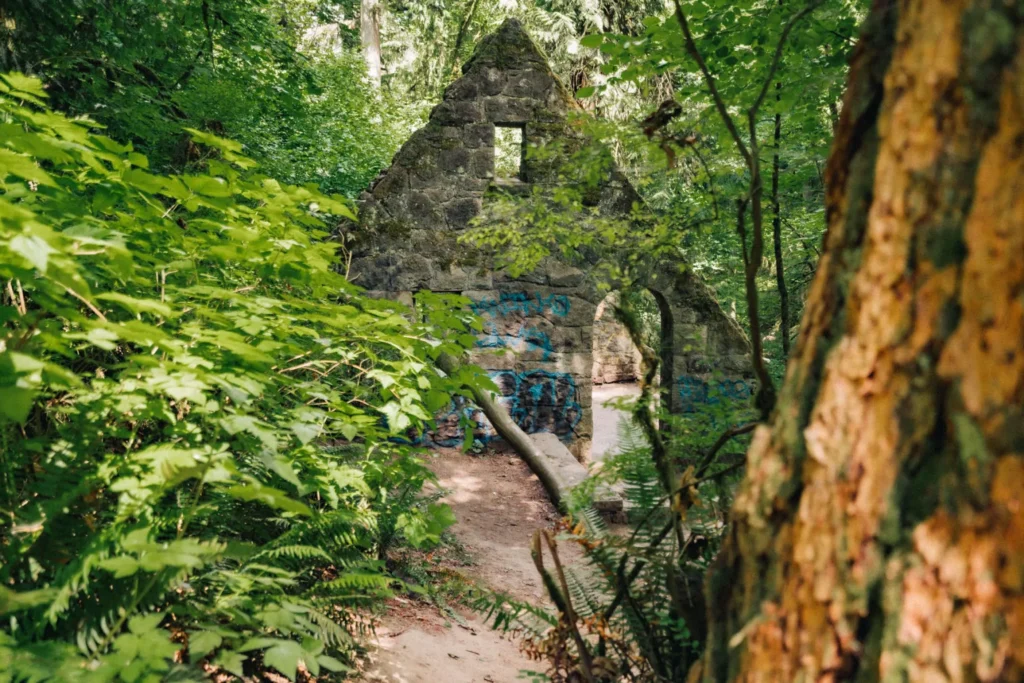
    The land of which this murder and execution took place is now a wilderness preserve called Forest Park. The picturesque landscape has been a popular location for joggers and campers for decades. So much so that the Portland Parks and Recreation Department constructed a stone building that functioned as a Park Ranger headquarters and public bathroom for patrons. In 1962 a powerful storm crashed through the city of Portland and caused a great amount of roof damage to the Park Ranger’s office in Forest Park. For reasons unverifiable, the building was never repaired and soon after was abandoned. In the years to follow, this stone structure was slowly reclaimed by nature and became a frequent underground venue for late night teenage parties.

    Due to the abandoned office being made of stone and mortar and the walls becoming overwhelmed by moss; the locals dubbed it “The Witch’s Castle.” Despite the name, there have been no reported occurrences of the land being used for Occult practices. With or without the presence of Occult happenings; this small building acts as a landmark for paranormal activity. Two fully bodied apparitions have been reported over the many decades. These apparitions are of two men and are believed to be the restless spirits of none other than Danford Balch and Mortimer Stump.

    Also, it has been said that if one goes to The Witch’s Castle at or around midnight; two groups of spirits are spotted quarreling with each other. The theory is that the Balch and Stump families continue to battle amongst each other over the murder of Mortimer. It is not only warring spirits that are seen, but also spirit orbs have been spotted and the whispers and screams of children. The land of Forest Park has seen a great deal of history and most of it has not been recorded. With a land steeped in high conflict, blood shed, and emotion it is no wonder that there are mysterious, unexplained occurrences happening at this location. It seems that it is not the building that is the source of the supernatural phenomena; it is the land itself that has imprinted the chaotic dynamic of the people that called this place home. As for the building, it is unusual that the local government of Portland has allowed it to decay, instead of repairing or demolishing it. Perhaps the otherworldly beings of the land keep construction work at bay; Perhaps they are protecting their home from outsiders.

  • Dorothea Puente

    Dorothea Puente

    “I used to be a very good person at one time” – Dorothea Puente

    There is a reason why Greed is one of the seven deadly sins. For it can lead a person to commit other heinous acts: lie, cheat, steal, and even murder. The thing about greed is that it consumes anyone and there is no such thing as enough. Even sweet looking grandmothers that share yummy homemade meals can be taken over by greed.

    The Back Story – Abridged

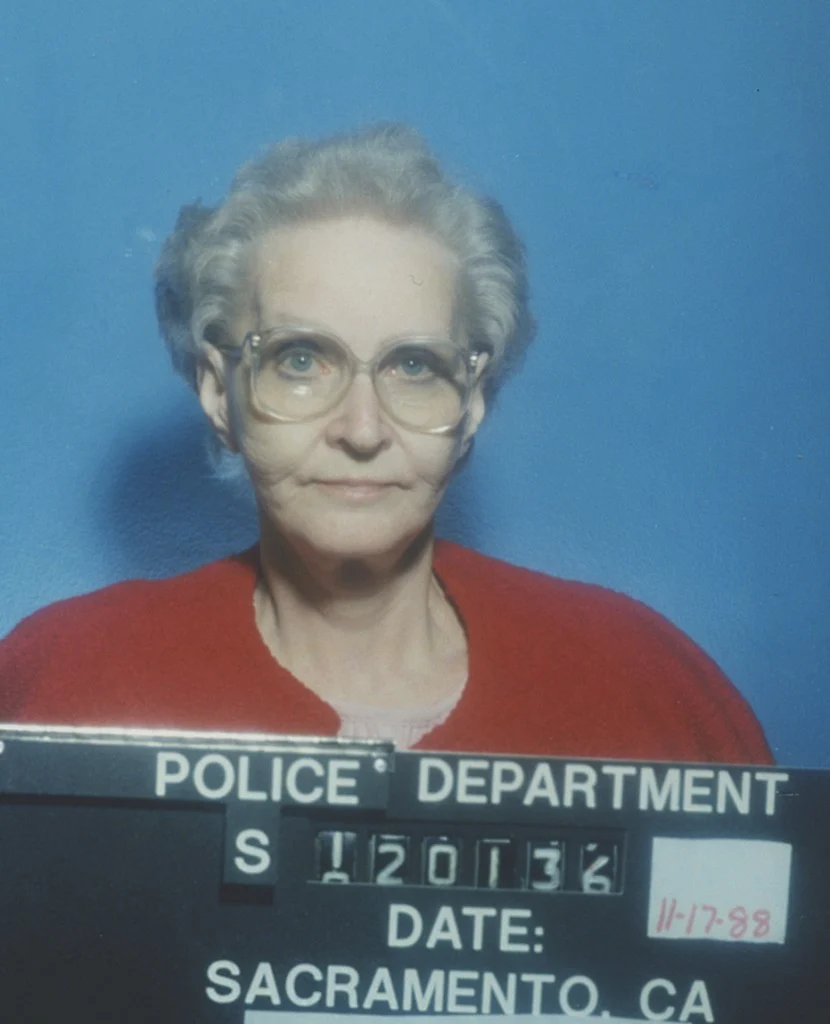
    Dorothea Puente was born January 9, 1929 in Redlands, California. Her early life was a struggle. She was sent to live in an orphanage in 1938 after she lost her father to Tuberculosis in 1937 and her mother in a car accident in 1938. Dorothea married for the first time in 1945 to a World War II soldier. This marriage was short-lived; he left her in 1948 and here is when her brushes with the law began. Dorothea was arrested and jailed for forging checks. In the 1960s she was again arrested for owning and operating a brothel. After this stay in jail for the prosecution ring, Puente became a nurse’s aide and first began running boarding houses. This paved road for her becoming an infamous serial killer.

    In 1966, Dorothea divorced and remarried a younger man, Roberto Puente in Mexico. That marriage dissolved quickly after only two years. After her failed union, Puente began to manage a 16 bedroom care home in Sacramento, California. Puente, married again in 1977 to a violent alcoholic named Pedro Monalvo. Naturally, this marriage ended quickly but did not stop her from seeking out another partner. She frequented local bars in search of older men receiving benefits. It didn’t take long for Dorothea to be charged with 34 counts of treasury fraud. What she did was forge the signatures of the men she meat to steal their money. In or around this time Dorothea Puente became the (owner) of 1426 F Street. That is when fraud was not longer satisfying Dorothea’ greedy needs.

    The Murders

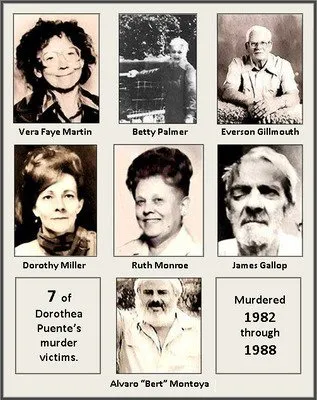
    Dorothea Puente was well-known to social workers in the Sacramento area. They liked her because she was willing to room and board difficult cases; those with mental illness and problems with addiction. She took in those that many people would not notice if they went missing. Her tenants often complained that she was withholding their government issued money and mail. She often read all of their mail before giving it to them. Motivated by personal gain, Dorothea Puente began her killing spree in 1982. It is believed that her fraud was lucrative and earned her $5,000.00 per month and that was during the ‘80’s. Her desire for gain surpassed any attachment or familiarity she had for her victims. In April 1982, Ruth Monroe moved into the upstairs apartment above Puente.

    Monroe was actually a good friend and business partners of Dorothea. She is also her first victim. Soon after moving into Puente’s building she was found dead in her room. It was determined that Monroe died of an overdose of codeine and acetaminophen. During this period in time, Ruth Monroe was struggling with depression due to her husband’s terminal illness. Due to this fact when police came to investigate; her death was ruled a suicide.

    Some weeks later, police returned to the boarding house. A 74-year-old tenant, Malcom McKenzie accused Puente of drugging him and then stealing from him. Mr. McKenzie is the first of four people Puente is accused of drugging. She was charged and convicted of thief in August 1982. She was sentenced to five years in jail and served three of those five years. As she was in jail she developed a pen pal relationship with an older gentleman named Everson Gillmouth. When Puente was released from jail, Gillmouth was there waiting to pick her up in a Ford truck. Despite her conviction of thief she was able to continue her work at the boarding house. Also, she and Mr. Gillmouth began to make wedding plans. Before their wedding could take place, Dorothea sent letter to Mr. Gillmouth’s family letting them know he was ill. At the same time Puente hired a handy man to build her a large pine box to store “junk” in. After she filled up the box and shut it tight she asked the same handy man to help her move it to storage. She gave him money and a Ford truck in good condition. She stated that it the truck belonged to her boyfriend, and he didn’t need it anymore. Along the way to the storage unit Puente changed her mind and asked for the pine box to be dumped by a lake. This lake area was an unofficial dumping site of unwanted items. In January 1986 a fisherman found the pine box and became suspicious it, so he reported it to the police. The police opened the box a found an unidentifiable discomposed body of an older man. It took investigators three years to identify the discovered body as Everson Gillmouth.

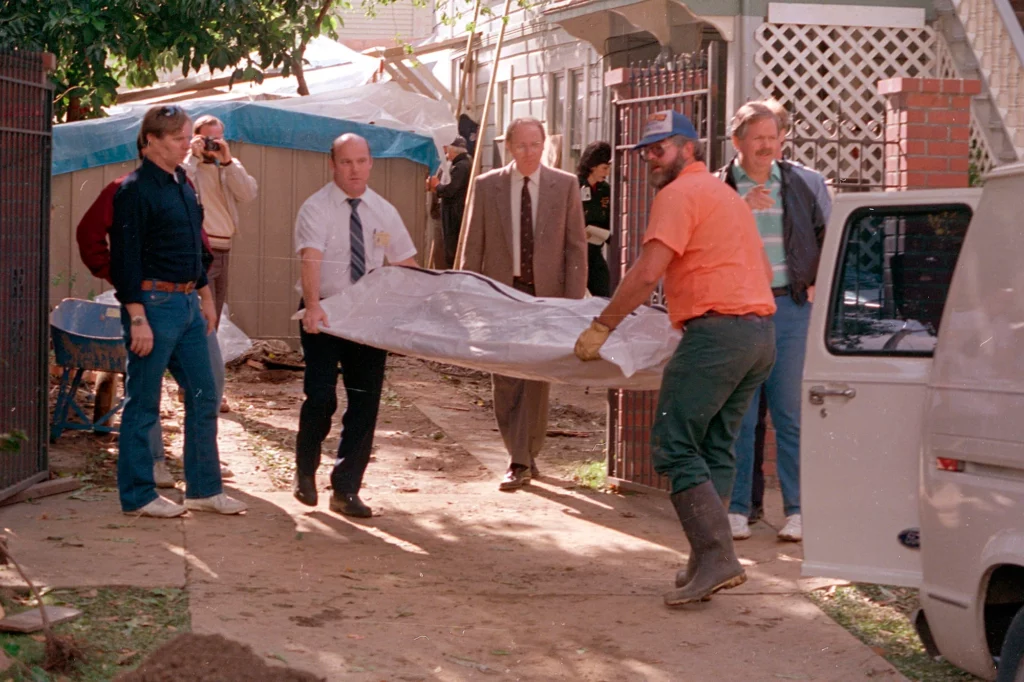
    Despite all the unusual activity going on F. Street, Puente was able to continue her room and board business running. Her tenants did file complaints about her to their social workers about how she ran her business and how she was treating them. Naturally they were upset about her going through their mail and with holding extra money from them for “expenses “. No less than 15 times was Puente verbally told to stay away from the elderly and to stop handling government check. However, Dorothea Puente’s questionable activities she was never suspected of true malice. That changed in 1988 when tenant Alberto Montoya, a disabled schizophrenic disappeared. A social worker that was over his case discovered that the boarding house was not licensed for the type of operation that was taking place. Then, when Mr. Montoya went missing she reported his absence and the boarding house to the police. Investigators arrived at the boarding house Puente initially told the officers that Montoya was on vacation. However, when an investigator noted that there was a plot of dirt on the property that had recently been upset; he requested permission to dig at that location. Even when investigators first starting digging on the property, Dorothea Puente was still not suspected of any wrong doing. Dorothea asked if she could go buy a coffee the police investigators stated that she could do so. When, she was gone seven bodies were discovered to be buried at the boarding house grounds. Also, Puente took her coffee run as an opportunity to flee to Los Angeles. She was only in hiding in Los Angeles for about five days. Even in that short amount of time Puente still managed to befriend an older man. Fortunately, the gentleman recognized her from television, and he turned her into the authorities.

    The Trial

    It took five years for Dorothea Puente to go to trial after she was charge with six counts of murder. Throughout the duration of the trial Puente denied that she killed anyone. Per journalists covering the case and court transcripts, Puente and her defense team stuck to the notion that all the tenants died of natural causes. Dorothea did admit that she was a thief, but she was not a killer. By the use to forensic evidence it was determined that each person was drugged with sleeping pills before they died. The court prosecutors argued that she was cold, greedy, and manipulative. That she drugged each of her victims and them suffocated them to their deaths. She was then accused of hiring homeless men and convicts to bury the bodies; then of course continued to cash their government checks long after she knew they were gone. It took the jury several days of deliberation the jury found Dorothea Puente guiltily of three murders. She was sentenced to three back-to-back life sentences in federal prison. She died in prison on March 27, 2011, at the age of 82.

    The Haunting of the Puente Murder House

    During the time Dorothea Puente was active, her house of full of fear, mistrust, and death. Her case sent shock waves through the community of Sacramento. It is no wonder that this location continues to be extremely active with paranormal energy. Despite its intense history, it is not always the most well-known haunted location in America. The Puente Murder House came to a worldwide consciousness when Travel Channel’s popular show Ghost Adventures went to investigate. During filming the show the Ghost Adventures Crew was able to interview investigators that worked on the case in the 1988. The information given by the now retired officers was crucial in collaborating evidence they would obtain during their paranormal investigation. The GAC was also able to have the services of psychic couple Mike and Marty Perry. During a session on location Mike believed that he was able to channel the spirit of one of Puente’s victims. Mike noted during his channeling the spirit shared with him that an area in the house used to have a wall up; that has since been knocked down during renovations. This turned out to be turned and it was a detail that was not a part of public records. Also, Marty was able to draw out Dorothea perfectly without seeing an image of her in the past.In 2011 the home was bought by married couple Barbara Homles and Tom Williams. They were aware of the history of the house and wish to fix up the old Victorian Bungalow to give it new life. The first week after Barbara, Tom, and mother Peggy Holmes moved in; activity paranormal in nature began to occur. Peggy believes that on the first night they moved in, Dorothea Puente herself came to her. Peggy explained to a news reporter that she was awakened in the middle of the night by the smell of heavy, sweet perfume and the presence she felt lead her to believe that it was the home’s former owner. Peggy then continued on to the reporter that she told the spirit to go away, and she fell back to sleep. She believes that the spirit of Dorothea has not been back since is because she knows that Peggy is not afraid of her. Peggy and the other house residents have also reported seeing light orbs, hearing footsteps, and seeing shadows. Prior to and since the airing of the Puente Murder House Ghost Adventures episode; there has been a consistent line of paranormal research team having the honor to investigate the historic house. These teams have been able to gather more evidence that the GACwas not able to. One team shared their evidence on YouTube, and they believe that made contact with an unidentified victim of Puente. Class A EVPs, video, and psychic evidence has been gathered by various teams over the years.

    The Puente Murder House was a real life house of horrors, driven by greed. The spirits that are still trapped in these walls are willing to reach out for help. It is terrifying to think that Dorothea Puente still holds power over them and is keeping them forever trapped in those walls. I have faith that one day a paranormal research team will be able to break down that barrier and set them free.

  • The Beast of Bray Road

    The Beast of Bray Road

    Location: Bray Road Elkhorn, Walworth County, Wisconsin

    In rural Wisconsin there is a stretch of road called Bray Road and it is the setting for a series of terrifying encounters, beginning in 1936 and continuing on until the present. What have dozens of people over several decades encountered? Well…no less than that of a flesh and blood Dogman. It all began, just before midnight on the grounds of St. Coletta School for Exceptional Children; a religious facility that cared for mentally disabled children. Scattered across these grounds are burial mounds of Native Americans that have been left untouched, at least by human hands.

    In 1936 the institute’s night watchman, Mark Schackleman, was making his routine rounds when he heard what sounded like raking occurring in an area that had several burial mounds. Only armed with his flashlight Schackleman advanced his way toward the sound; what he came upon was stunning. It appeared to be a creature clawing at the top of one of the mounds. At first he didn’t get a great look at the creature due to the fact that it turned away as Schackleman approached. Mark Schackleman was a bit confused because he believed that this large, hairy being stood up on two legs before it disappeared into the darkness. 

    Mr. Schackleman was a determined man and was ready to get to the bottom of what was stalking in and around the grounds of the school. Mark stalked the open space where the burial mounds were located and he went alone. To his great luck or misfortune, the unknown animal had returned to the mounds and begun digging at the top of them. This time the beast did not turn away from Schackleman as he crept closer and closer. This creature did not show fear or anxiety as it stood up on its two back legs and stared directly into Mark’s eyes. Mark described the beast as standing over six feet tall, dark/black hair, and had a wolf-like head. The eyes though…the eyes seemed almost human. The odor was not unlike that of rotting meat and the body was incredibly muscular. This Dogman creature growled deeply and to Mark, the growls sounded almost human and possibly formed a language. 

    At this time in 1936 Mark Schackleman only told his wife what he had experienced and sworen her to keep his secret. Mark was a man of God and of integrity; he was concerned that if he shared what happened to him, his reputation would be damaged. It wasn’t until the 1950’s when Mark shared his Dogman experience with his son Joe. Joe Schackleman shared his father’s experience with author Linda Godfrey for her book The Beast of Bray Road – Tailing Wisconsin’s Werewolf and this is considered the first recorded encounter with what would be known as the Beast of Bray Road. When Joe was asked what his father thought the Beast was, Joe quoted his father saying: “That damn thing came straight out of Hell.” For decades Mark Schackleman’s Beast remained unseen again until the 1980’s. 

    For unknown reasons the sightings of the Beast of Bray Road spiked greatly in the 1980’s and 1990’s. In 1993 single mother and bartender Lorianne Endrizzi was driving down Bray Road after dark and as she was scanning the road she spotted what she believed to be a man crouching on the shoulder of the road. She slowed down to see what the man was doing when she came face to face with a real life monster. It was no man crouching on the side of the road, but a creature with the head of a wolf, a muscular body, with arms and hands like a human only with claws at the tip. According to Lorianne’s retelling it also had yellow eyes, pointed ears, fangs, and covered with fur. Needless to say Lorianne sped away in her car as quickly as she could. 

    The description of the Dogman remains consistent throughout most if not all of the witnesses’ encounters. Another constant with these experiences is that the Dogman has never attacked a human that has crossed its path. Yes, it has given chase, jumped on vehicles, and struck terror in the poor souls that were in the wrong place at the wrong time. Even though it seems that no one has been physically hurt by it, the idea of seeing it again makes the hair on their arms stand up. There is no doubt in their minds that the Dogman does not fear humans at all and can easily over power any man in seconds. During the research phase of this write, I got the sense that the Dogman seemed to look down on the humans it comes in contact with. 

    Now, going into the 2000’s the number of reports and sightings of the Beast of Bray Road has decreased, but by no means have they stopped. In July 2020 a blue collar worker named Ron Rice told Ed Nadolski at MyRacienCounty.com, on July 10, 2020 he was driving to the nearby town of Lyons, Wisconsin, to deliver fertilizer to a small farm on Highway 36, west of Church Road. As Rice was sitting on his truck bed for a moment, he scanned the bountiful tree line that was about 150 feet in front of him. There, at the tree line he spotted a massive wolf-like creature standing on two legs. According to Rice, this Dogman had to be at least seven feet tall. 

    Rice’s Dogman then bent over and picked something up, before returning into the forested area. Two weeks later, Ron Rice returned to that area and believes that he saw the beast again. Once again the Wolf Beast seemed to be collecting a few things again before going back to the woods, where it has not been seen since. Is the Beast of Bray Road a Werewolf? Even though there have not been any reports of it having great supernatural abilities, aside from it being impressively strong and fast. Is it a Dogman? Wendigo? A Skinwalker? Hopefully the beast will reveal itself again and further study can be done…and at a distance.

  • “Ata” the Mysterious Miniature Alien

    In 2003, the mummified remains of a small skeletal body was uncovered in the Atacama Desert of Chile. This skeleton body was fully intact but only ten ribs, an elongated head, and only six inches in length. This discovery sparked a great excitement among paranormal researchers, due to the fact that “Ata” had a very alien and otherworldly appearance.

    (more…)
  • The Don Vicente Inn

    The Don Vicente Inn

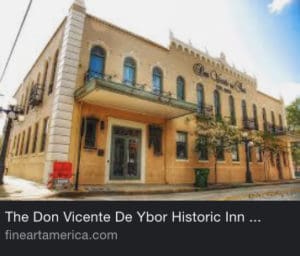
    The historical district of Tampa, Florida known as Ybor City was established in the late 1890’s by Cuban National Vicente Martinez Ybor, as the location for his business endeavor of manufacturing high quality, hand rolled Cuban Cigars. Ybor’s cigar business model was so successful that Ybor City became widely known as Cigar City. With the expanding workforce came a need for more housing development for the workers. To remedy the housing need, Ybor commissioned architect Francis J. Kennard to design the building of The Ybor City Land and Improvement Company in 1895; at an estimated cost of $35,000.00. With humble intentions in mind, Vicente Ybor could have never guessed the gruesome events that would manifest inside the walls of The Ybor City Land and Improvement Company, making it one of the most haunted buildings in the state of Florida. 

    Dr. Jose Ramon Avellanal was a prominent figure and physician in Ybor City and the Head Physician at the Centro Espanol Sanitarium. In 1903 Dr. Avellanal bought the property and converted the building into the Bien Publico Clinic that served the people of Ybor City from 1903-1939. Dr. Avellanal was a very influential figure around Ybor City and lived in a fine home with his wife and son Jose Luis Avellanal. Despite Dr. Avellanal’s great work and contribution to the Ybor City and the Tampa Bay Area as a whole; it is his son Jose Luis that history remembers and all for terrible reasons. 

    Jose Luis was a highly intelligent child and was able to study science and technology independently and recreate what he had learned. His most well known experiment is when he was able to build a functioning electric chair and to verify that it worked properly, he strapped a neighborhood boy in it and turned it on. The homemade electric chair did in fact work and Jose Luis’ victim did not die, but was left permanently disfigured. This boy is one of many children that Dr. Avellanal would take into his care due to the injuries inflicted on them by his son. Jose Luis loved power and control over others. In his youth Jose Luis shot a 10 year old boy in the eye with a BB gun, beat up, and over all looked for ways to hurt other children. Due to Dr. Avellanal’s influence in the community, Jose Luis was never disciplined and a lot of these events were not recorded. It took several hours of research to verify the electric chair incident and the only source found about it was the June 15, 1983 issue of The Tampa Tribune newspaper.

    Dr. Avellanal and his wife did their best to handle Jose Luis on their own. First, trying to send him to boarding school, where he spent a great deal of time in solitary confinement yet Jose Luis’ violent urges continued. Later as an adult Jose Luis was put up in an apartment by his parents in El Pasaje, where he would collect stray cats off the streets and freeze them. It has been said that Jose Luis also kidnapped young women and froze them as well. Later on Jose Luis began posing as a physician (sometimes as his own father) and surgeon to perform medical experiments on men and women. When his victims inevitably died he would hide their bodies in the basement of Bien Publico Clinic. 

    These horrendous events being contributed to Jose Luis have never been brought to a trial, however due to Dr. Avellanal’s past actions of paying off families and officials to cover for Jose Luis, it could very well be in the realm of possibility that officials looked the other way. Now, that means that these poor souls never received justice or proper burials. Jose Luis lived out his natural life a free man, only getting into trouble for petty crimes and fraud and still posed as a doctor, plastic surgeon, and even a Lt. General for the Mexican Army.

    Dr. Jose Ramon Avellanal died July 25, 1927 and the Clinic was taken over by Dr. Nestor A. Portocarrero. In 1939 the practice was bought out by Dr. A.A. Gonzalez and renamed the A.A. Gonzalez Clinic and remained in serving the community until it closed in 1980. For eighteen years this once busy establishment remained empty and abandoned until 1998 for the purpose of renovating the building into The Don Vicente Inn; the remodeling took two years and was open for business in 2000. It was at this time the pain and chaos of the past was realized by the new building owners, staff, and guests.

    Billy Morrison, guitarist of Camp Freddy, stayed at The Don Vicente Inn as a guest and Tweeted on August 27, 2012: “Staying at the Don Vicente in Tampa…and this s**** is HAUNTED!!! Google it – I’m telling you I’m seeing s****!!!”

    It seems after Morrison tweeted this out, he was disturbed enough by what he experienced to never revisit or explain exactly what he experienced that night. It could be possible that he was staying in the infamous Room 305; which was said to be one of the most active rooms in the building. Guests would report the lights flickering on and off and no amount of maintenance could fix the problem. Also, these same visitors stated that they would wake up from a deep slumber, only to find the full body apparition of a young man standing at the end of the bed. Also, audible footsteps could be heard pacing up and down the hallways, with no obvious source of said foot steps.

    The basement of The Inn seems to be a cesspool of dark paranormal energy. The staff of Vicente Inn have frequently encountered a Spanish speaking nurse that for reasons unknown cannot leave the basement. It is unknown how or why she remains within the walls of The Inn. Perhaps the most terrifying of all is that some staff and guests believe that they have had a close encounter with none other than Jose Luis Avellanal himself. Even though he died of natural causes February 11, 1982, it could be possible that due to his evil deeds conducted in Bien Publico Clinic trapped his soul with those he killed. These days The Don Vicente Inn is now full of residential apartments, as The Inn closed its doors May 28, 2015.

    No matter what renovations have been completed, the exchange of hands, and businesses that have operated, its bloody past has refused to be forgotten. This kind of history and events are not only reserved to The Don Vicente Inn; the Tampa Bay Area is littered with notorious and haunted locations up and down the beautiful, sandy coastlines. It has been said that Tampa is the damndest city this side of Hell. The Don Vicente Inn and many other buildings live up to that reputation. With the bizarre reputation of the State of Florida and its residents; the endless cycle of paranormal occurrences is unable or unwilling to end. 

  • America’s First Recorded UFO Sighting – March 1, 1639

    America’s First Recorded UFO Sighting – March 1, 1639

    America’s First Recorded UFO Sighting – March 1, 1639

    Mr. John Winthrop (1587-1649) was one of the founders of the Massachusetts Bay Colony. To understand Mr. Winthrop’s influence and respect he carried at this time; he was Governor for twelve years of the Colony’s first twenty years of existence. During his lifetime while living in the early years of the New England colony, Mr. Winthrop kept a journal of the average daily workings at the time. Governor Winthrop’s entries have been compiled into a published work called: Winthrop’s Journal or History of New England; it has since been edited by James Kendall Hosmer, LLD. 

    This glimpse into this point in history seems like a very unlikely place to find a written record of a possible UFO sighting. On page 294 Mr. Winthrop describes an account told to him by a Mr. James Everall. Mr. Everall shared with Governor Winthrop about a fantastic experience he had one summer evening in March of 1639. The brief passage told to the Governor was shared as followed:

    “In this year one James Everall, a sober, discreet man, and two others, saw a great light in the night at Muddy River (now Brookline, Massachusetts). When it stood still, it flamed up, and was above three yards square; when it ran, it was contracted into the figure of a swine: it ran as swift as an arrow towards Charlton, and so up and down for about two or three hours. They came down in their lighter about a mile, and when it was over, they found themselves carried quite back against the tide to the place where they came from. Divers, other credible persons saw the same light, after, about the same place.”

    Not only was this event witnessed by several people but the fact the people in the boat on the river found themselves back up the river where they started. With no memory of how they got back there has led some UFO researchers to speculate that it was not only a UFO sighting but also an early alien abduction case. Their reasoning behind this theory is due to the fact that it seems that Mr. Everall and his companions lost track of time. According to their own account, they witnessed this light phenomena for hours as they traveled downstream of the Muddy River. However, they seemed to have lost track of time and at the same time ended the experience where they started. In between witnessing the light trek back and forth between the Muddy River and Charlton, they traveled back upstream from where they came from. 

    The witnesses had no memory or understanding of how they got back to their original checkpoint. This mirrors hundreds of thousands of accounts of modern alien abductions; a large chunk of time lost and no memory of how one ended up in a different location from where they began. Of course this story is centuries old and cannot be verified, but it does give researchers a possible clue as to the reality of alien visitors. That perhaps alien and UFO encounters are not such a new occurrence and previously thought.

  • The Haunted Road of England – B3212

    The Haunted Road of England – B3212

    The Haunted Road of England – B3212

    The land of Princetown, Devon in England is damp and fair weathered. Over the centuries this rural landscape has a unique history. In the 1800’s this area was home to a Powder Mill; a factory that manufactured gun powder. Over the years in operation there were a great amount of devastating accidents that occurred in these powder mills, so much so that there is an urban legend that surrounds an Italian worker Mike Cutler. It is said that this lowly worker suddenly came into a large sum of money and celebrated his new fortune by indulging in “to much cider.” While intoxicated, Mr. Cutler went to his forge at the factory while still wearing his hobnail boots. The story continues to say that his boots created a spark that ignited the flammable material around him. All that was left of him was his hands…his large, hairy hands.

    In the early 1800’s the Napoleonic Wars were ongoing with no signs of ending anytime soon and later the War of 1812 joined the fray. Due to the influx of French prisoners of war, a man named Daniel Asher Alexander was commissioned to design a massive prison facility to be known as Dartmoor Prison. At one point, the prison was documented to have 6,000 inmates at one point. In 1815 the Wars came to an end and the remaining prisoners were released; Dartmoor Prison remained closed until 1850. Dartmoor officially began taking civilian inmates in 1851 and then closed again in 1917. Then once again reopened in 1917 and remains active to this day. 

    There is a rural road near Dartmoor Prison marked as B3212 and stretches from Princetown to Two Bridges and is said to be haunted by a pair of disembodied hairy hands. According to legend these hands take control of a motor vehicle by grabbing the steering wheel/handle bars and driving the vehicle off the road. The first victim of the hairy hands is the medical officer of Dartmoor Prison, Dr. Ernest Hasler Helby. Dr. Helby was riding his motorbike down B3212 with the Deputy Governor’s two daughters in the sidecar. 

    Dr. Helby suddenly realized that he had lost control of the bike and ordered the two girls to jump out of the sidecar. The young girls did as they were told and survived the crash with no injuries. Unfortunately, The Guardian newspaper reported on March 28, 1921, that Dr. Helby died in that motorcycle accident due to a skull fracture at the age of 51. However, one of the girls told an officer that as Dr. Helby lost control of the bike, she saw a pair of hairy hands gripping the handle bars and took over control of the bike. As the girls rushed to the crashed bike the disembodied hands were still holding on to the handle bars.

    This eye witness report can be chalked up to the imagination of a traumatized child, if it were not for another motorcycle accident that occurred only two months later. The Daily Mail, October 14, 1921 issue reported that a man, who wished to remain discreet and called “Captain M” crashed his bike, also on B3212, but he was able to survive. In his report as to what happened Captain M stated “Believe it or not, something drove me off the road. A pair of hands closed over mine…large, muscular, hair hands.” This fatal haunting was only just beginning to collect victims and it doesn’t seem to be limited to motor vehicles; regular bikes and caravans have also been known to attract the spirit hands. Author and Folklorist Theo Brown was 9 years old in 1924 and went on a little road trip with her parents. The family ventured through the countryside in their family’s caravan. One night the family parked the caravan near B3212 and near to the site of the old Powder Mill. 

    Theo’s mother was awakened in the middle of the night by scratching sounds coming from just outside the thin glass window. When she investigated she spotted a “bristly” hand crawling itself up the side of the caravan. An ominous feeling came over her and she felt that this ownerless hand had evil intent and prayed for protection until the hand vanished. Theo, herself did not experience this event, even though she was sleeping within the caravan. In later years she convinced her mother to write down what she witnessed that night. 

    Fatal and non-fatal accidents continue to take place to the present day and the bizarre hairy hands are still being reported by those who survive their crashes. Even those riding pedal power bikes are targeted by the hairy hands and have caused the riding victims great injuries. This hairy handed poltergeist targets random victims, seemingly for the sole purpose of causing harm; making it one of the few hauntings where people are actually killed by the spirit. There is no pattern or connection between the hands’ victims and no signs of stopping or slowing down. Daring to drive down B3212 for the desire to have an encounter with the hairy hands is not advised as it could be the last road trip you ever go on.  

  • Krampus: The Demon Companion of  St. Nicolas

    Krampus: The Demon Companion of St. Nicolas

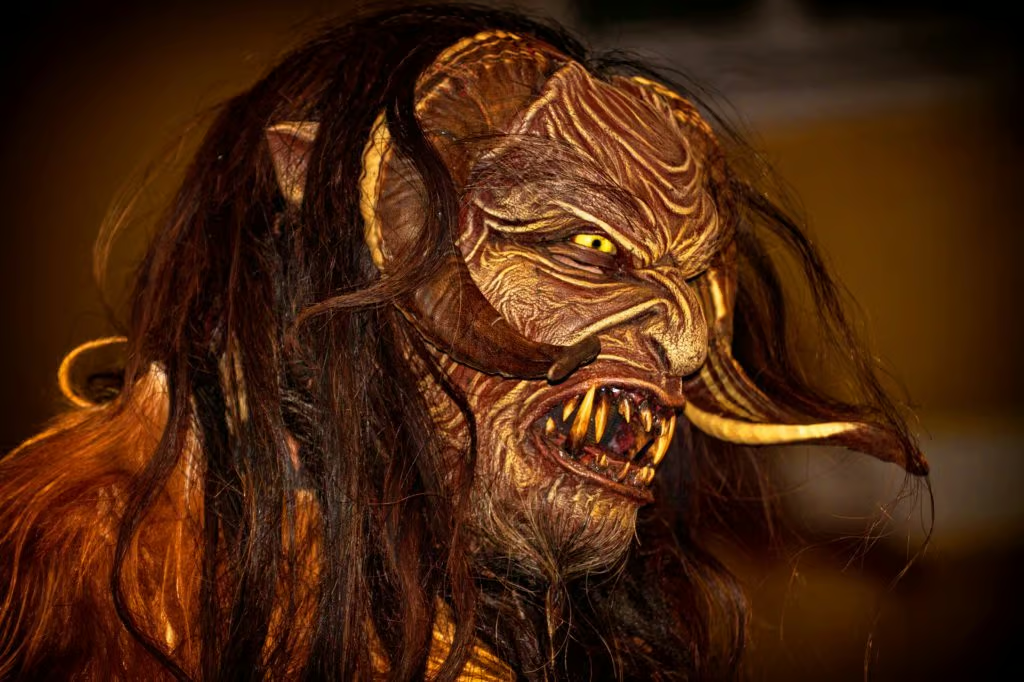
    With the Holiday season in full swing there is a sense of good cheer in the air. Along with visions of sugar plums dancing in the heads of children, there’s a resurgence of an old Alpine holiday figure that was almost lost in time. That figure is represented as a horned half demon, half goat known as Krampus. While St. Nicholas lived up to his name as Father Christmas, by bringing the good, well behaved children of the world gifts and sweets. Krampus’ duties included beating naughty children with birch bundles and stealing them away to the underworld for a year. While often in modern times Krampus is depicted as being an evil being, Krampus is actually St. Nicholas’ companion and appears to take directions from the beloved Saint.  

    With the Holiday season in full swing there is a sense of good cheer in the air. Along with visions of sugar plums dancing in the heads of children, there’s a resurgence of an old Alpine holiday figure that was almost lost in time. That figure is represented as a horned half demon, half goat known as Krampus. While St. Nicholas lived up to his name as Father Christmas, by bringing the good, well behaved children of the world gifts and sweets. Krampus’ duties included beating naughty children with birch bundles and stealing them away to the underworld for a year. While often in modern times Krampus is depicted as being an evil being, Krampus is actually St. Nicholas’ companion and appears to take directions from the beloved Saint.  

    The name Krampus is inspired by the German word Kramer, fittingly meaning “claw”. There is no definitive knowledge of the origins of Krampus, though it is safe to say that he predates Christianity as a figure in winter solstice celebrations. Several sources believe that Krampus is possibly the son of Hel, Norse Goddess of the Dead and ruler of the underworld, also called Hel. Though this writer could not find any Norse stories depicting this familiar relationship between the two beings. Nonetheless, Krampus became a regular part of the Christmas celebrations by the 17th century. December 5 is known as Krampusnacht or “Krampus Night” and is the night that Krampus pays a visit to all the children who have misbehaved throughout the year and gives them their punishments. Then December 6 is the night that St. Nicholas visits the good children and bestows upon them small gifts and treats.

    Greeting cards or “Krampus Cards” from the 18th and 19th century depict Krampus and St. Nicholas visiting a home together. Often Father Christmas gives nice gifts to one good child while Krampus whips the disobedient sibling or stuffing him/her in a sack to take away. Other cards were more for adults as some art work showed Krampus proposing marriage to a woman, a woman hiding Krampus’ birch twigs behind her back, or a woman stuffing Krampus into his own bag. Most of these cards were meant to be funny and had humorous poems written in them.  

    Thanks to new movies and the power of the Internet, this Christmas demon that is hundreds of years old is making a comeback in European cultures in the form of parades, festivals, and even modern Krampus holiday cards. The dark magic and appeal of Krampus is now expanding across the world and has made it to the shores of America. Though it can be noted that in some regions the terrible appearance of Krampus has been toned down, to appeal to a wider audience. How the mythos of Krampus will continue to evolve into these new cultures will remain to be seen. Merry Christmas and Happy Holidays to all the wonderful Relamers. Be mindful to make Saint Nicholas’ Nice List or else one may feel the stinging whip of Krampus’ birch bundles. 

Secret Link